
2026 Korea inbound tourism report · EP. 04
Hospitality insightsSix days in Seoul: shopping, transport and stays through a host's eyes
At a glance
Seoul visitors stayed an average of six days, eating, shopping and using the subway. Use the June 2026 survey to review return routes, luggage space and living guidance.

At a glance
- The June 2026 survey reported an average 6.0 days in Seoul.
- Food experiences 91.1% and shopping 90.3% were the most common activities.
- Subway/airport rail use was 80.9%, with taxis also common at 56.8%.
- Shopping creates a need for luggage space and packaging-disposal guidance.
- Check evening return routes and entrance photos for guests coming back late.
Learn more
Think about six days in Seoul from your property’s perspective
Hosts may first think of the time guests spend inside. Travellers also shop, eat and change trains before coming back. Their experience includes finding the entrance easily at the end of a day carrying heavy bags.
Seoul Tourism Organization’s third-round June 2026 provisional international visitor survey reported an average 6.0 days in Seoul, a 51.3% repeat-visit rate and overall satisfaction of 91.1 out of 100. This article consistently uses the third-round column rather than mixing earlier rounds or cumulative averages. Days in Seoul may differ from nights booked at one property. Official Seoul Tourism Organization report
What guests need after shopping and dining
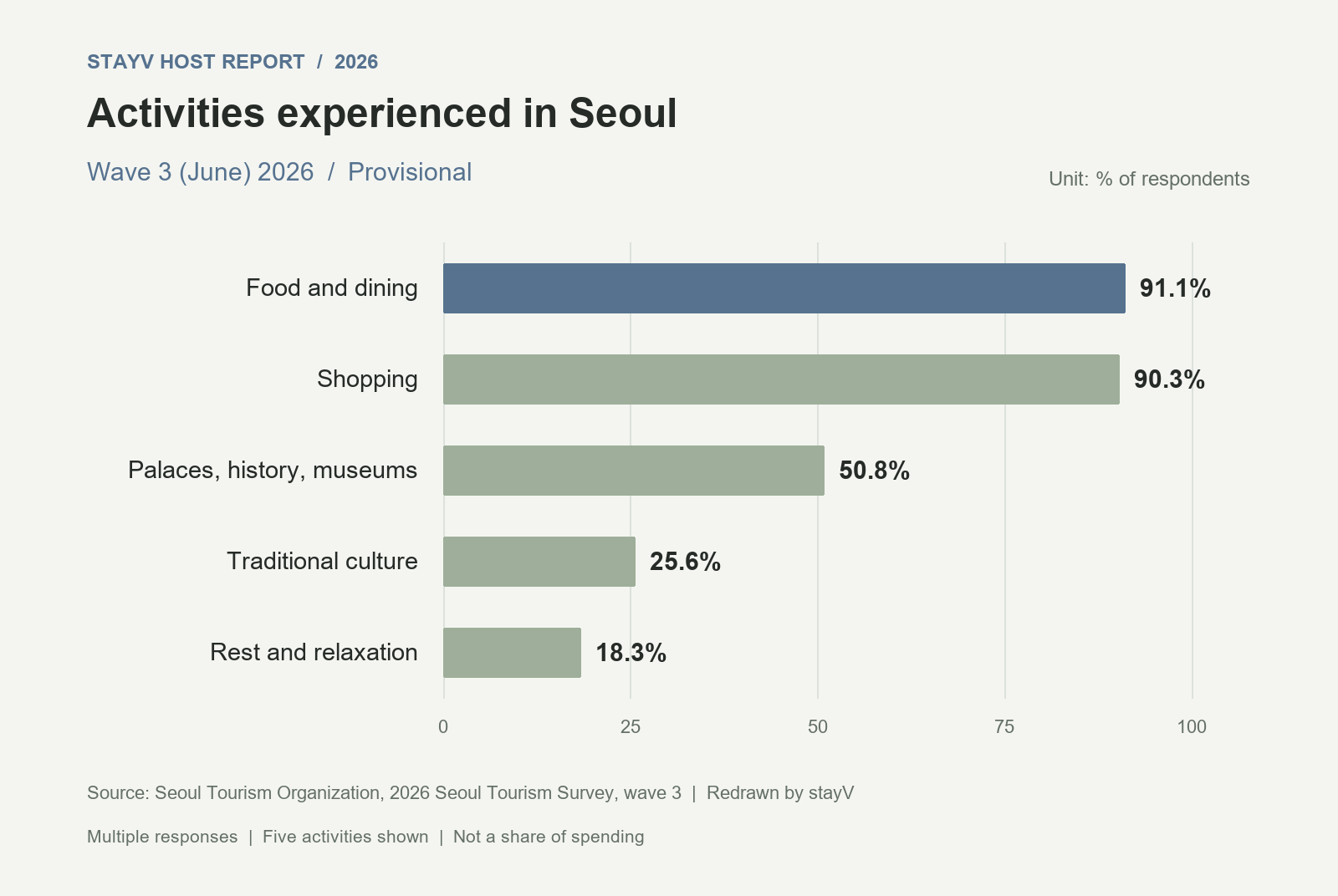
Reported activities included food experiences 91.1%, shopping 90.3%, and palaces, historic sites or museums 50.8%. Respondents could select several. These rates cannot forecast a particular shop’s revenue, but help us picture an active day outside.
View chart values in a table
| Category | Value |
|---|---|
| Food experiences | 91.1% |
| Shopping | 90.3% |
| Palaces, historic sites and museums | 50.8% |
| Traditional culture | 25.6% |
| Rest and relaxation | 18.3% |
Prepare places for a late meal, water and snacks, plus instructions for cleaning up takeaway food. Link to official information for restaurants requiring bookings or places with changing hours.
Prospective hosts should check the evening environment as well as daytime shops. Is a convenience store nearby? Does food smell or noise enter the room? Is the night-time approach intuitive? Shopping proximity and a restful property are separate considerations.
Purchases also suggest a need for packing space
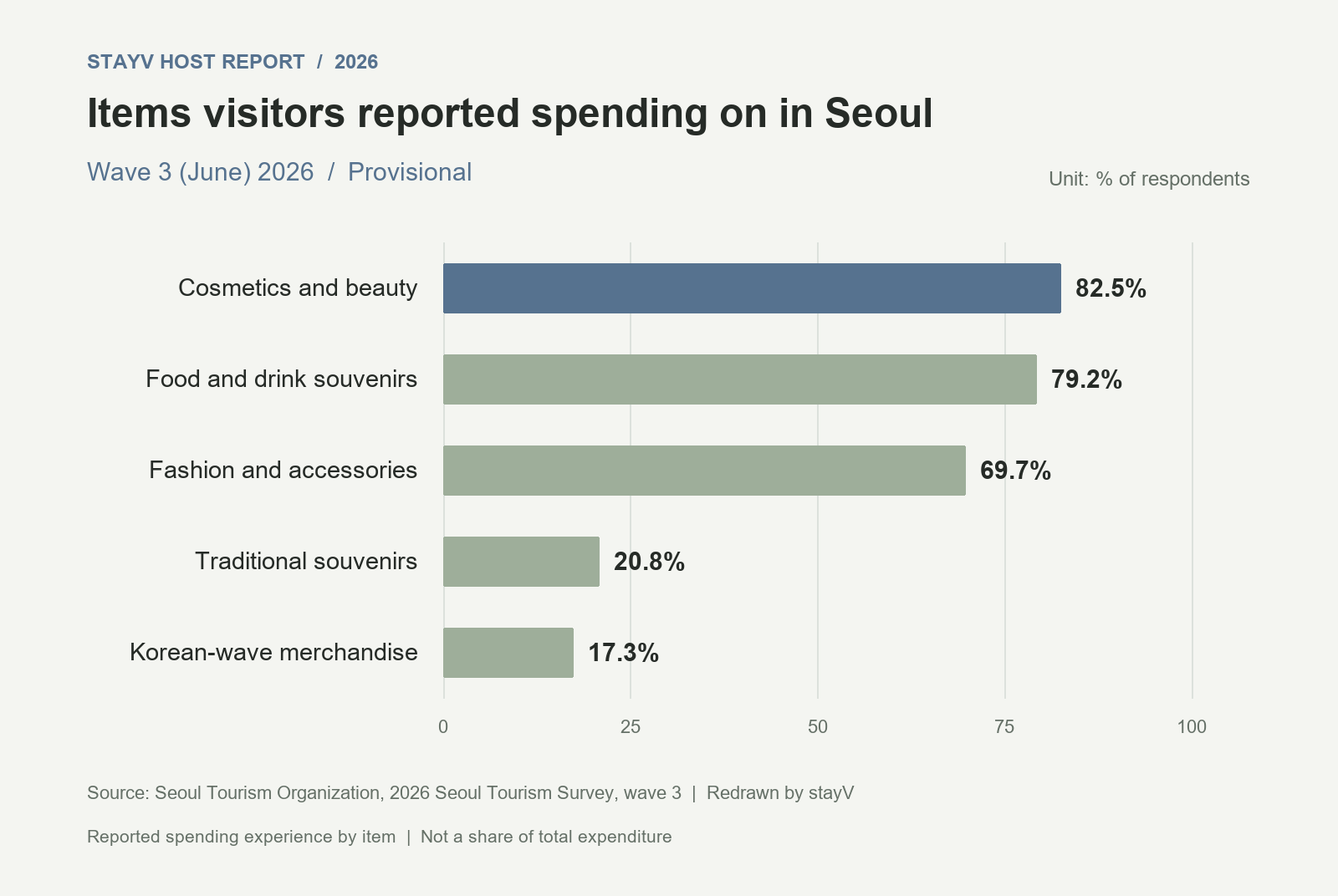
Shopping expenditure-experience responses included cosmetics/beauty 82.5%, food/drink souvenirs 79.2% and fashion/accessories 69.7%. These record whether people spent on each category, not quantities, average spending or shares of total shopping expenditure.
View chart values in a table
| Category | Value |
|---|---|
| Cosmetics and beauty | 82.5% |
| Food and drink souvenirs | 79.2% |
| Fashion and accessories | 69.7% |
| Traditional souvenirs | 20.8% |
| Hallyu products | 17.3% |
Check for space to set down shopping bags, open a suitcase and collect packaging. Packing before departure can create extra rubbish; make paper and plastic instructions easy to find.
If you offer luggage storage, explain the time, place and arrangement. If not, you can identify a nearby official storage service and what to check before using it. Link to the relevant service for discount, duty-free or refund conditions.
Why taxi guidance matters alongside subway use
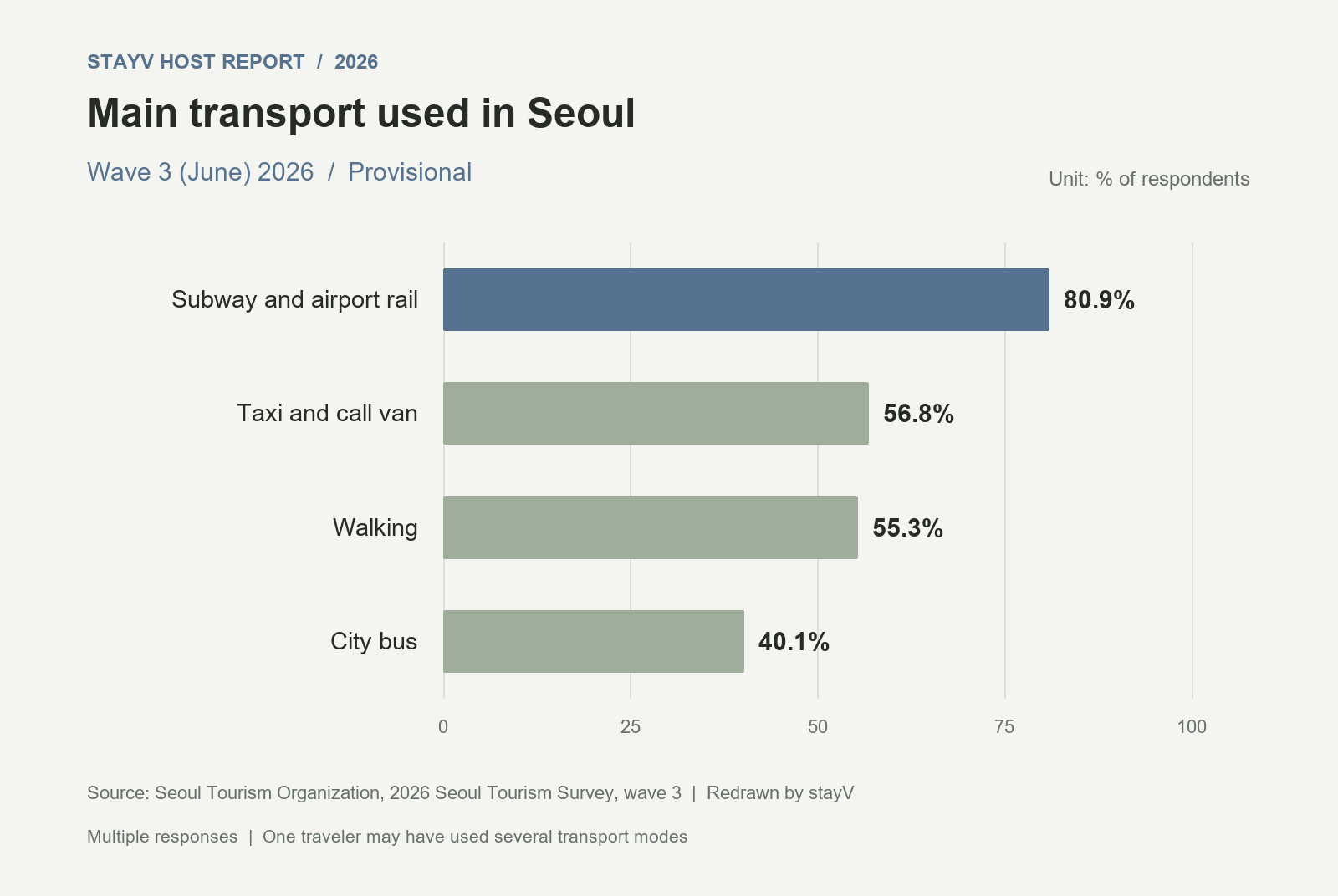
Main transport responses included subway/airport rail 80.9%, taxis/call vans 56.8%, walking 55.3% and city buses 40.1%. People could choose several modes, so subway and taxi users are not separate groups.
View chart values in a table
| Category | Value |
|---|---|
| Subway and airport rail | 80.9% |
| Taxis and call vans | 56.8% |
| Walking | 55.3% |
| City buses | 40.1% |
The same guest may take rail from the airport and a taxi after shopping. Provide a main public-transport route and a taxi approach. Explain the exit, final walk and conditions for travellers with luggage, beyond naming a station.
A map can open correctly while the guest still cannot identify the door. Check day and night photos and distinguishing features of similar buildings. Date any timetable or fare information and link to official services for rechecking.
Accommodation data helps define living guidance
The same survey reported shared-accommodation use of 11.5% and an average 8.5-day stay for that category. This has a different scope from Seoul’s overall 6.0-day average, so do not add or divide them. Episode 3 covers accommodation in detail.
Use this as a prompt for laundry, groceries, fridge use and rubbish guidance. List likely questions across several days rather than stopping at the idea that many tourists arrive.
Operating hosts can address items matching actual enquiries. Prospective hosts should check luggage space, washing/drying, ventilation and night-time returns. City averages alone cannot estimate a property’s stay lengths or revenue.
Connect the start and end of the day with stayV
Use arrival guidance for returning to the property, nearby information for food and groceries, and stay information for laundry, rubbish and luggage policies. Check recommended places yourself and help guests recheck current information before visiting.
Start with one recent question about returning, shopping nearby or leaving luggage. A guide built around the traveller’s day can explain convenience that room photos cannot convey.
Explore stayV Host · Use maps and nearby information · Check the guest view
Data basis and sources
Only the third-round June column of Seoul Tourism Organization's provisional 2026 international visitor survey is used. Report pages: key results 7, activities 30, accommodation 33–34, transport 36 and shopping expenditure experience 39. The survey covers departing international visitors to Seoul aged 15 or over, with exclusions including long-term stays. Days in the city, accommodation stays and response rates are distinguished; multiple responses are not summed. stayV redrew official figures, and facility and guidance suggestions are its interpretation.